The Risk Institute at the Probabilistic Safety Assessment and Management Conference (PSAM 18)
/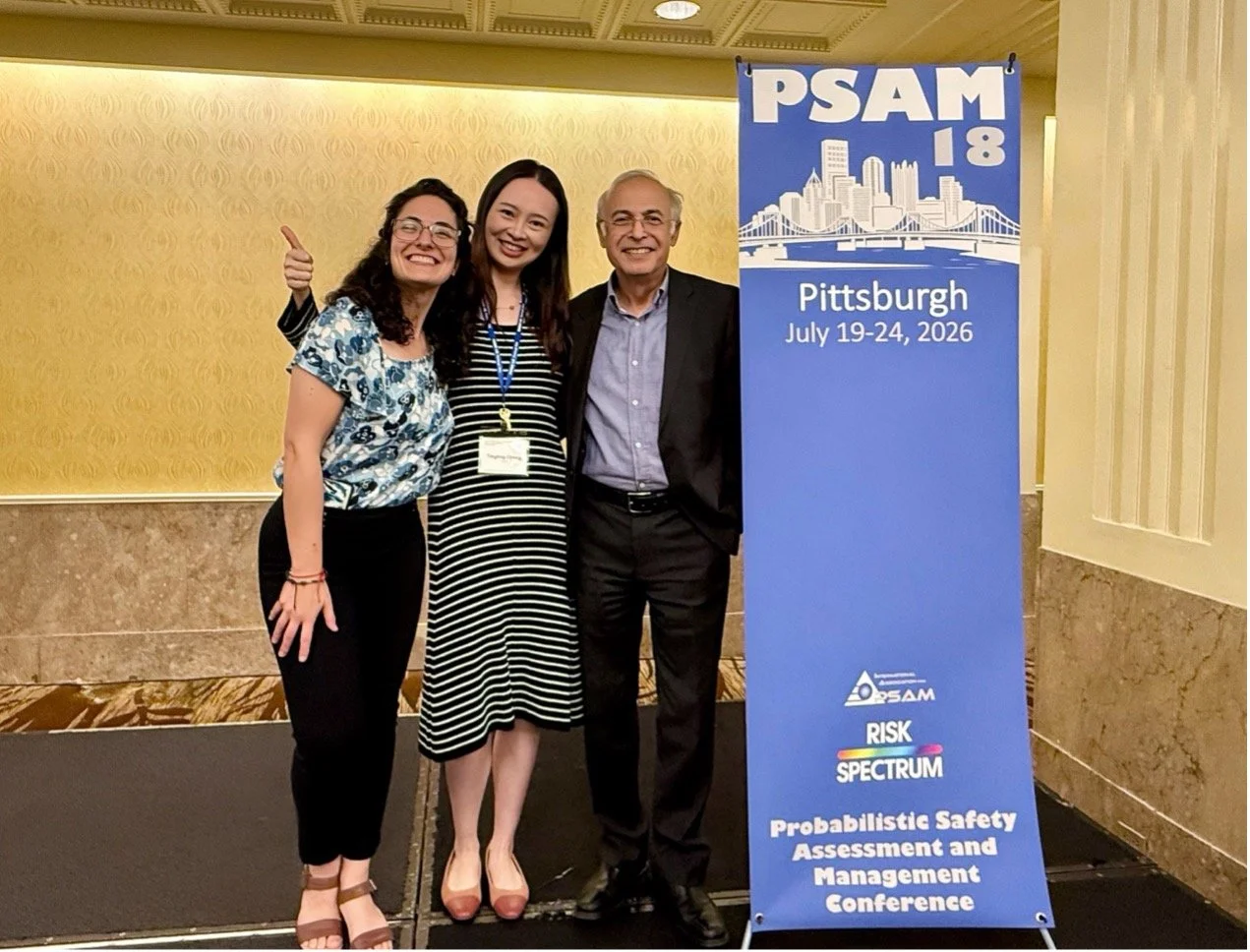
(Left to Right) Camila Correa-Jullian, Tingting Cheng, Ali Mosleh.
The Risk Institute researchers presented at the Probabilistic Safety Assessment and Management Conference (PSAM 18) in Omni William Penn Hotel, Pittsburgh, Pennsylvania, U.S. from July 19-24, 2026. PSAM is a well-known conference for discussing Nuclear Risk with a 30-year history.
1. Presentation: “Bayesian belief network-based HRA dependency analysis: Methodology and case study”
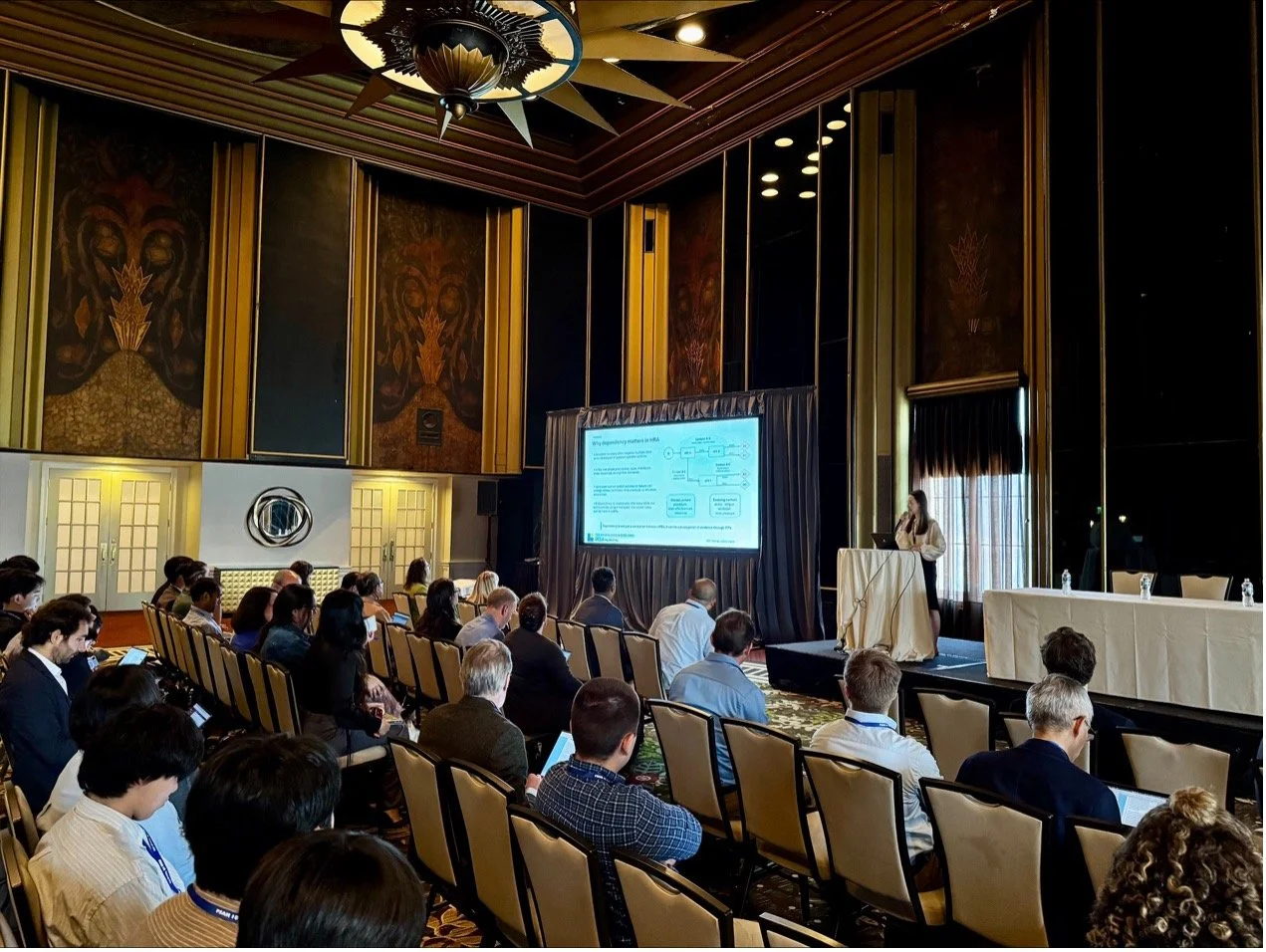
Tingting Cheng, PhD
By: Tingting Cheng, Marilia Ramos, Ali Mosleh
This paper developed a Bayesian belief network–based method for analyzing dependency among human actions in Human Reliability Analysis. The method distinguishes sequential dependency, static causal dependency through shared performance-influencing factors, and dynamic causal dependency through evolving operational conditions. Applied to a nuclear power plant valve-operation scenario within the Phoenix HRA framework, the approach updated downstream human error probabilities using evidence from preceding operator actions. The results demonstrate that dependency does not always increase risk and show how explicit causal modeling can make dependency assumptions and calculations more transparent and traceable.
2. Presentation: “LLM-Based Extraction of Causal Relationships among Organizational Factors for Extending Human Reliability Analysis”
By: Tingting Cheng, David Doberstein, Ali Mosleh
This paper developed a large language model–based pipeline to uncover how organizational factors influence human performance in safety-critical industries. The system analyzed 266 publications and extracted evidence for 38 predefined causal relationships among 19 organizational factors. It identified 1,538 candidate causal instances, with 1,482 matching the target relationships and evidence found for every relationship examined. The study shows how structured LLM-based text-extraction pipeline, supported by designed structured prompts, can organize dispersed research evidence for human reliability analysis and Bayesian network development, while emphasizing that all extracted findings still require expert validation.
3. Special panel: “What Every Human Factors Expert Needs to Know about Human Error and Reliability”
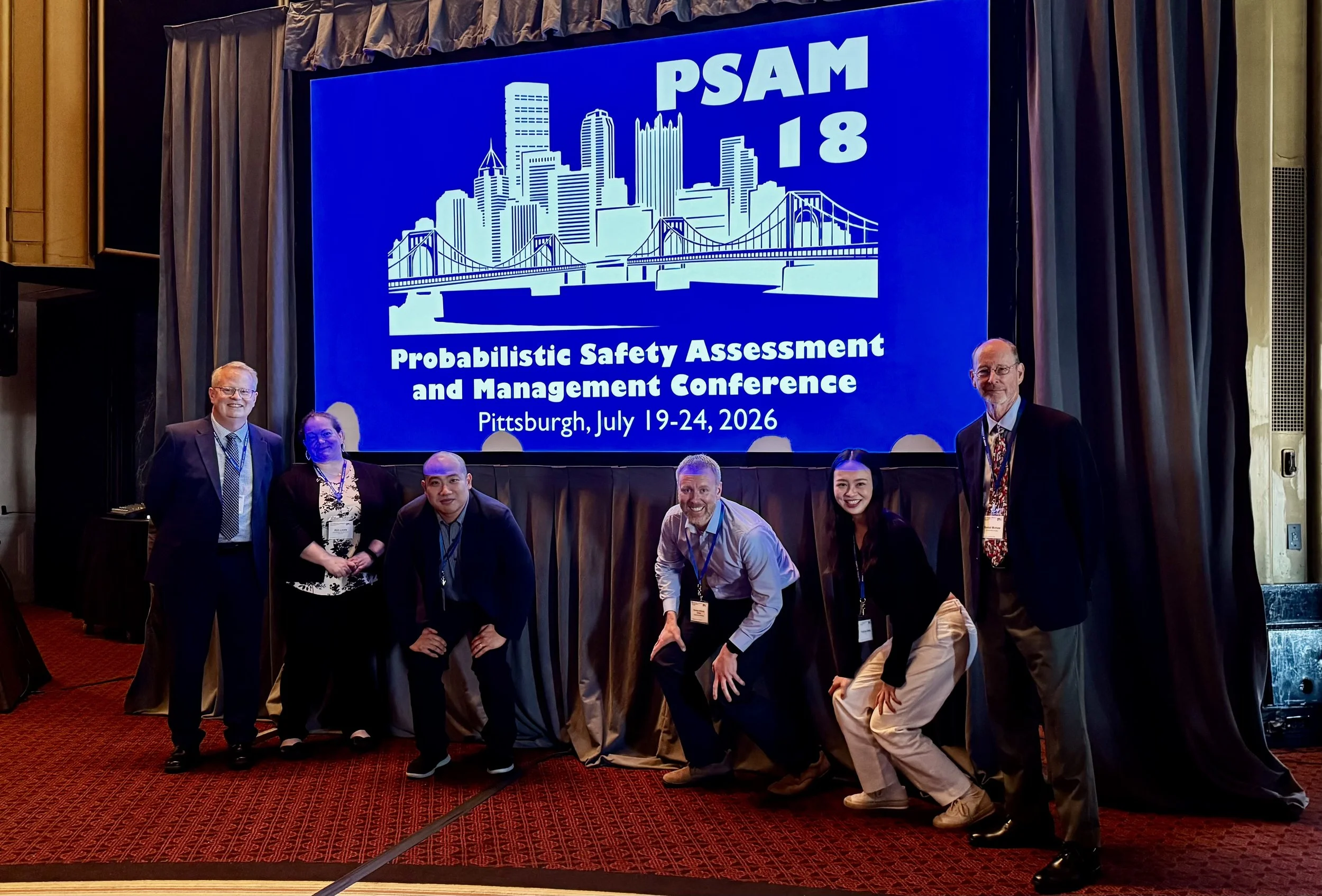
Image by Psam 18
Dr. Tingting Cheng served as a panelist of the special panel to explore the continuing relevance of human error across defense, maritime autonomy, rail, aviation, nuclear energy, and user experience. Panelists discussed approaches for quantifying human error and adapting HRA to increasingly complex systems. They also examined dynamic human-autonomy collaboration, broader influences on operator performance, and applications to usability and design. The session highlighted current challenges, cross-domain insights, and opportunities to advance human error research and practice within human factors engineering.
4. “Contributions of PRA to Probability and Statistics: A Methodological History
A Talk Dedicated to the Memory of Corwin C. Atwood (2026)”
By: Ali Mosleh
Probabilistic Risk Assessment has not only drawn from probability, statistics, and uncertainty quantification, but has also made important methodological contributions to these fields. This talk traces developments including the distinction between aleatory and epistemic uncertainty, Bayesian estimation, expert judgment elicitation, use of partially relevant data, data mapping, and uncertainty propagation. It also considers their influence on decision theory, data science, and artificial intelligence. The presentation concludes with ongoing challenges and emerging research directions.
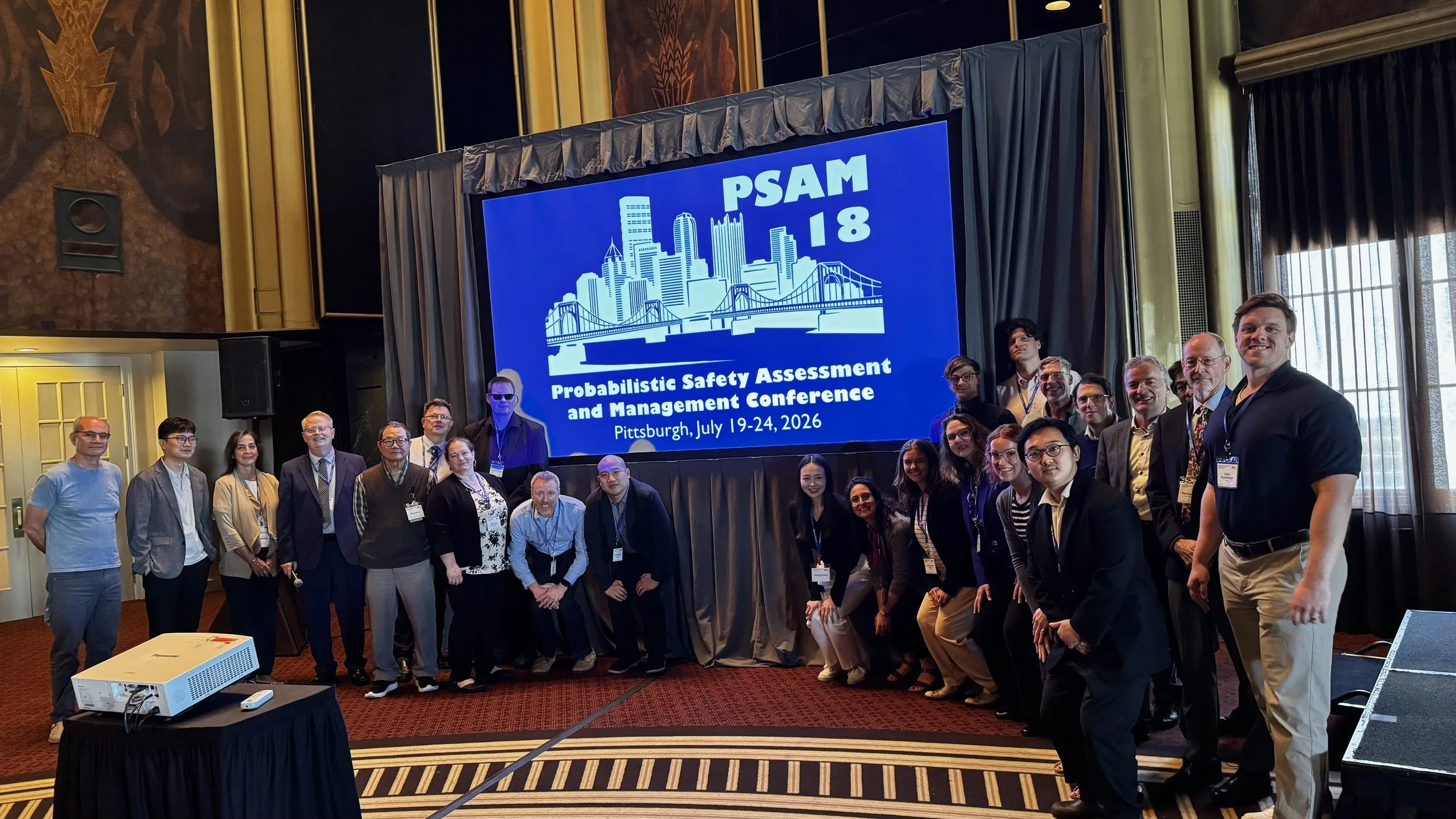
Image by PSAM 18