Alex Hall

Alex Hall
Professor
Atmospheric and Oceanic Sciences


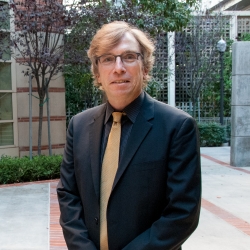
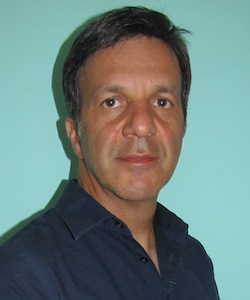
Alex Hall is a professor of atmospheric and oceanic sciences and an expert in climate change. Hall, an atmospheric physicist and a member of the UCLA Institute of the Environment and Sustainability, specializes in regional climates, global climate change and climate modeling.

Ximin He


Ximin He
Assistant Professor
Materials Science and Engineering

Ph.D. University of Cambridge
M.S. Tsinghua University

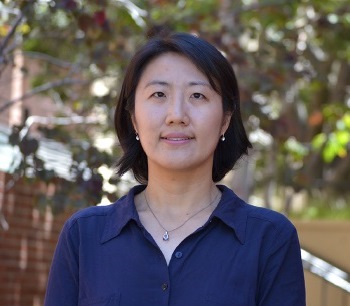
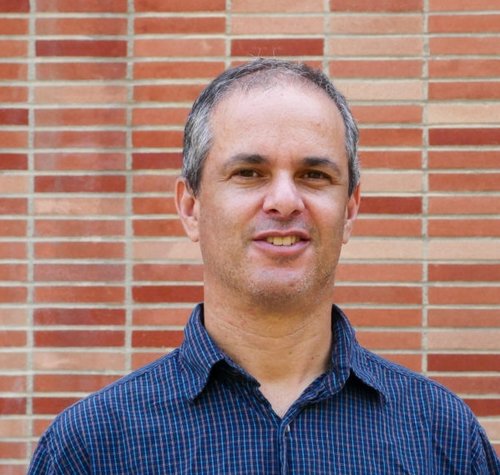
Dr. He is an Assistant Professor in UCLA's Materials Science whose research focuses on biologically inspired materials based on stimuli-responsive polymers and micro/nanostructure fabrication, for applications in biomedicine, environment, and energy. The interdisciplinary research across “design – synthesis – properties – functions” involves polymer chemistry and physics, molecular design and synthesis, and studies of mechanical, optical and electrical properties of soft materials. Dr. He was a Postdoctoral Fellow at Harvard and obtained her Ph.D. in Chemistry/Nano Optoelectronics; University of Cambridge.

David Jassby

David Jassby
Associate Professor
Engineering Hydrology

Ph.D. Duke University
M.S. University of California, Davis
B.S. Hebrew University of Jerusalem, Biology

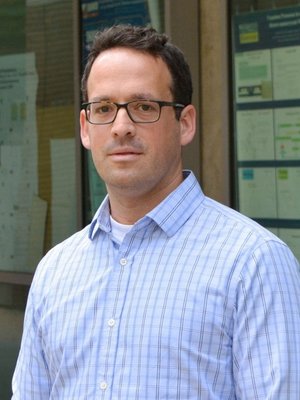
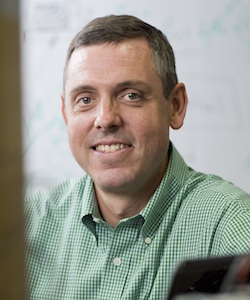
Dr. Jassby joins C&EE in 2017-2018. Previously he was an assistant professor in the Department of Chemical and Environmental Engineering at the University of California, Riverside. Dr. Jassby received his B.S. in Biology from Hebrew University (2002), a M.S. in Civil and Environmental Engineering from UC Davis (2004), and a Ph.D. in Civil and Environmental Engineering from Duke University (2011). 

Jennifer A. Jay

Jennifer A. Jay
Professor
Environmental Engineering

Ph.D. Massachusetts Institute of Technology
M.S. Massachusetts Institute of Technology
B.S. Massachusetts Institute of Technology

Our approach involves integrating field, experimental, and geochemical modeling work to understand the environmental fate and transport of microbial and chemical pollution and nutrients. We are currently working in several areas: 1) We are characterizing how sediments in coastal creeks can provide the ecosystem service of reducing the impact of microbial pollution on water quality.

Michael Jerrett

Michael Jerrett
Professor and Chair
Environmental Health Sciences

Ph.D. University of Toronto
M.S. University of Toronto
B.S. Trent University

Dr. Michael Jerrett is an internationally recognized expert in Geographic Information Science for Exposure Assessment and Spatial Epidemiology. He is professor and chair of the Department of Environmental Health Sciences in the Fielding School of Public Health at UCLA. Dr. Jerrett earned his PhD in Geography from the University of Toronto (Canada). For the past 22 years, Dr. Jerrett has researched how to characterize population exposures to air pollution and built environmental variables, how to understand the social distribution of these exposures among different groups (e.g., poor vs. wealthy), and how to assess the health effects from environmental exposures. Over the last decade, Dr. Jerrett has also studied the contribution of the built and natural environment to physical activity, obesity, and several health outcomes. In 2009, the United States National Academy of Science appointed Dr. Jerrett to the Committee on “Future of Human and Environmental Exposure Science in the 21st Century.” The committee recently concluded its task with the publication of a report entitled "Exposure Science in the 21st Century: A Vision and a Strategy." In 2013, the U.S. Environmental Protection Agency appointed Dr. Jerrett to the Clean Air Scientific Advisory Sub-Committee for Nitrogen Oxides. From 2014 to the present, Dr. Jerrett has been named to the Thomson Reuters List of Highly Cited Researchers, indicating he is in the top 1% of all authors in the fields of Environment/Ecology in terms of citation by other researchers.

Jiann-Wen “Woody” Ju

Jiann-Wen “Woody” Ju
Professor
Structural Engineering

Ph.D. University of California, Berkeley
M.S. University of California, Berkeley

My current research interests concern mechanics of materials and constitutive modelings of advanced engineering materials. In particular, I am interested in micromechanical damage mechanics of brittle composites, micromechanics of random heterogeneous elastic and inelastic fibrous and particulate composites, continuum elastoplastic damage mechanics, plasticity and viscoplasticity theories and computational algorithms, advanced constitutive modeling of materials, nonlinear computational mechanics, nondestructive and destructive testing, durability, reliability, sulfate attack, and construction defects.

Jon Keeley

Jon Keeley
Adjunct Professor
Ecology and Evolutionary Biology

Ph.D. University of Georgia, Athens
M.S. San Diego State University
B.S. San Diego State University

Jon Keeley, an adjunct professor of ecology and evolutionary biology, is an expert on the ecological impacts and history of wildfires in Southern California and other ecosystems with Mediterranean-type climates. A focus of Keeley’s research involves the relationship between wildfires and the invasion of natural ecosystems by non-native plants, how plants respond to environmental stresses such as fire, and also seed germination.

Miryung Kim


Miryung Kim
Associate Professor
Computer Science

Ph.D. University of Washington
M.S. University of Washington
B.S. Korea Advanced Institute of Science and Technology

Professor Kim is an expert on software engineering, with focus on designing techniques to evolve large software systems and to improve software quality. Her research group, Software Evolution and Analysis Laboratory, develops sofware analysis algorithms and development tools to make it easier to develop and evolve large scale software systems. she also has extensive background in automated program transformation, user studies with professional engineers, and statistical analysis of open source project data to allow data-driven decisions for designing novel software tools. 

She is a recipient of an NSF Faculty Early Career Development (CAREER) Award, Microsoft SEIF Award, IBM Jazz Innovation Award, and Google Faculty Award. She has a strong track record of building scalable and practical tools for program transformation, refactoring, and mining software repository data.

Xiaochun Li


Xiaochun Li
Professor
Mechanical and Aerospace Engineering

Ph.D. Stanford University


Professor Li is the Raytheon Chair in Manufacturing Engineering, Mechanical and Aerospace Engineering department. His research interests are: scifacturing, interdisciplinary areas of innovative manufacturing and materials processing, solid freeform fabrication, nanoscience and nanotechnology, laser micro/nanomaterials processing, and process/system integration.

Ali Mosleh

Ali Mosleh
Professor
Reliability Engineering

Ph.D. University of California, Los Angeles
M.S. University of California, Los Angeles
B.S. Sharif University

Dr. Ali Mosleh is Distinguished Professor and holder of the Evelyn Knight Chair in Engineering at the University of California in Los Angeles.  Prior to that he was the Nicole J. Kim Eminent Professor of Engineering and Director of the Center for Risk and Reliability at the University of Maryland.

Dr. Mosleh is also a Fellow of the Society for Risk Analysis, and the American Nuclear Society, recipient of several scientific achievement awards, and consultant and technical advisor to numerous national and international organizations. In 2004 he was appointed by President George W. Bush to the U.S. Nuclear Waste Technical Review Board. He continued to serve on the board under President Obama until 2012.

Arash Naeim


Arash Naeim
Professor
David Geffen School Of Medicine

M.D. University of California, Los Angeles
Ph.D. RAND Graduate School
B.S. University of California, Los Angeles

Dr. Arash Naeim, M.D., Ph.D. is a Professor of Medicine in both Divisions of Hematology-Oncology and Geriatric Medicine at the David Geffen UCLA School of Medicine. He is Associate Director for the Clinical Translational Science Institute, and Chief Medical Officer for Clinical Research for the UCLA Campus and Health System. His research interests included outcomes research, cost-effectiveness analysis, modeling of health and frailty, and clinical trial design. His focus of research for the majority of his publications and research grants has been in breast cancer and cancer in the elderly. He is the UCLA Principal Investigator for the Athena Breast Health Network and NIH grant that aims to use sensor technology and analytics to reduce risk, integrate innovative technology, and advance precision medicine.

Ramin Ramezani


Ramin Ramezani
Adjunct Associate Professor
Computer Science

Ph.D. Imperial College London
M.S. Lancaster University
B.S. Bangalore University

Dr. Ramin Ramezani is an Adjunct Associate Professor of Computer Science. He previously served as a Research Scientist at the Center for Smart Health, UCLA, and as the Managing Technical Director at the Clinical and Translational Science Institute (CTSI) within the David Geffen School of Medicine. Formerly, he was the Chief Technologist in the Big Data and Analytical Unit of the Department of Surgery and Cancer at Imperial College London. He holds a Ph.D. in AI from Imperial College London working on automatic reformulation of AI problems and combined reasoning. His research focuses on transforming healthcare through artificial intelligence.

Izhak Rubin

Izhak Rubin
Professor
Electrical and Computer Engineering

Ph.D. Princeton University
M.S. Technion-Israel Institute of Technology
B.S. Technion-Israel Institute of Technology

Dr. Rubin's research and teaching interests include communications/telecommunications, computer networks, multimedia IP networks, UAV/UGV-aided networks, integrated system and network management, C4ISR systems and networks, optical networks, network simulations and analysis.

Gaurav N. Sant


Gaurav N. Sant
Assistant Professor
Civil And Environmental Engineering

Ph.D. Purdue University
M.S. Purdue University
B.S. Purdue University

Dr. Sant is an assistant professor in the Department of Civil and Environmental Engineering, and holder of the Edward K. and Linda L. Rice Endowed Chair in materials science. His research is focused on elucidating structure-property relations in inorganic materials including metallic, and non-metallic materials, and specifically understanding how reaction processes are formative, and/or destructive of microstructure. As thrust areas, the research, which spans from "atoms to infrastructure", seeks to: (i) quantify solute-solvent reaction dynamics at interfaces, (ii) monitor, manipulate and mitigate electrochemical corrosion processes and (iii) quantify and simulate coupled mass and ion transport processes in random porous media.

Majid Sarrafzadeh


Majid Sarrafzadeh
Professor
Electrical and Computer Engineering


Professor Sarrafzadeh's research interests are: Wireless Health and Biomedical Devices, Embedded and Reconfigurable Systems, Design and Analysis of Algorithms, and Data Analytics.

Jason L. Speyer

Jason L. Speyer
Professor
Mechanical And Aerospace Engineering

Ph.D. Harvard University
B.S. Massachusetts Institute of Technology

Dr. Speyer performs research on stochastic and deterministic optimal control and estimation with application to aerospace systems; guidance, flight control, and flight mechanics. Some of his projects include fault detection and identification for ground vehicles, autonomous formation flight, and management of air vehicles systems. 

Jonathan P. Stewart


Jonathan P. Stewart
Professor
Civil And Environmental Engineering

Ph.D. University of California, Berkeley
M.S. University of California, Berkeley
B.S. University of California, Berkeley

Dr. Stewart's primary research interests are in geotechnical earthquake engineering and engineering seismology, with emphases on seismic soil-structure interaction, earthquake ground motion characterization, seismic ground failure, and the seismic performance of earth structures including structural fills and levee embankments. His research has involved: interpretation of earthquake strong motion data to gain insight into soil-structure interaction effects, characterize site effects, and to produce practical models for the prediction of ground motion intensity measures; cyclic field testing of earth structures and full-scale foundation components including shallow foundations, drilled shafts, and bridge abutment walls; advanced dynamic testing of soils in the laboratory; and case history studies of the seismic field performance of infrastructure in California, Taiwan, Turkey, Japan, Greece, Italy, and India. Results from his research group are widely utilized in engineering practice, including a 2012 NIST guidelines document for soil-structure interaction, ground motion prediction equations used for the USGS National Seismic Hazard Maps, ASCE-7 (for new structures), ASCE-41 (existing structures) and additional guidelines documents for landslide risk and tall building design.

Paulo Tabuada

Paulo Tabuada
Professor
Electrical and Computer Engineering

Ph.D. Instituto Superior Técnico
M.S. Instituto Superior Técnico
B.S. Instituto Superior Técnico

Paulo Tabuada's main research interests cover a range of topics which could be described as a modern systems theory. In particular, he is interested in modeling, analysis, and control of real-time, embedded, networked and distributed cyber-physical systems. Dr. Tabuada also directs the Cyber-Physical Systems Laboratory (CyPhyLab), which conducts research at the intersection of computation, communication, and control. 

Ertugrul Taciroglu


Ertugrul Taciroglu
Professor and Chair
Civil And Environmental Engineering

Ph.D. University of Illinois at Urbana-Champaign
M.S. University of Illinois at Urbana-Champaign
B.S. Technical University of Istanbul, Turkey

Professor Taciroglu's research interests lie within the broad area of computational solid and structural mechanics. He is currently working on topology optimization of smart material systems, soil-structure interaction in deep and shallow foundation systems, wave propagation in continuous media, inverse problems—with various applications in system identification, structural health monitoring as well as surveillance—and simulation of structural response under extreme loadings such as explosions, and ballistic impact.