F25 GIRS Seminars: Modelling of Route Icing Risks for Arctic Marine Operations: Enhancing Operational Planning and Risk Preparedness
/When: Thursday, December 04, 2025
Time: 12:00pm PT
Where: (In-Person) UCLA Engineering 6 BLDG, Rm 580B and ZOOM
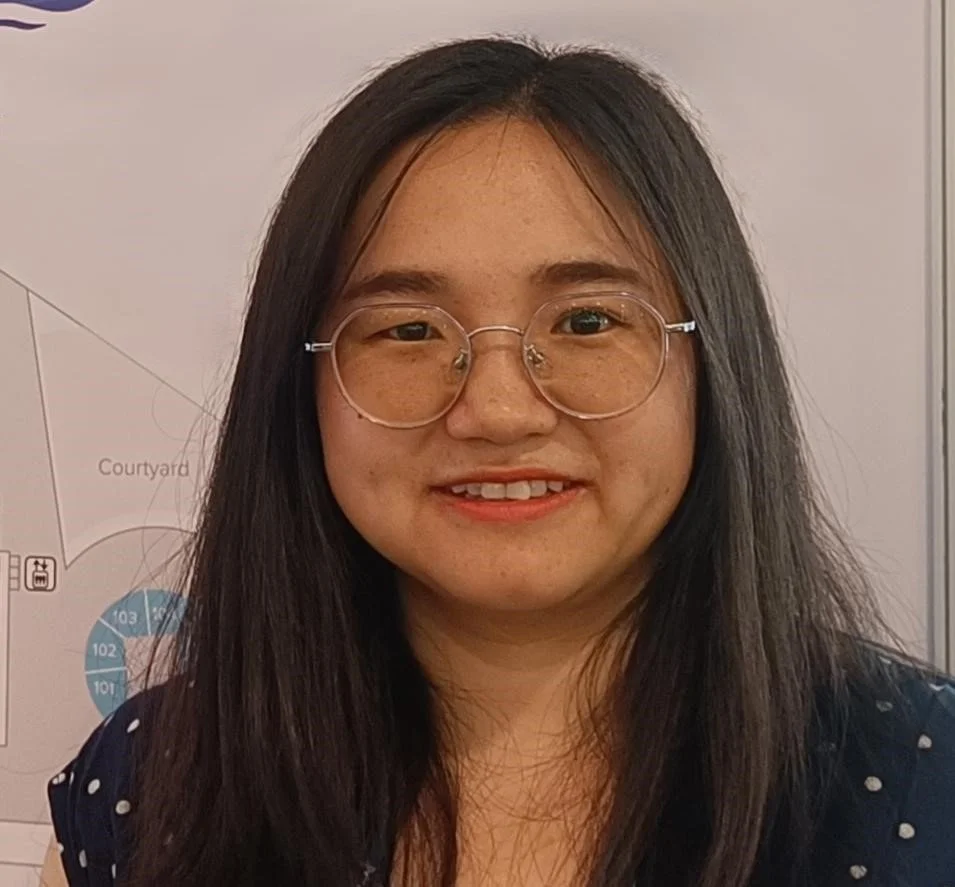
Tiantian Zhu
Abstract: Ship operations in the Arctic face challenges from icing, particularly during winter months. Icing on vessel surfaces poses serious risks, including reduced stability that, in extreme cases, can lead to capsizing. The International Maritime Organization (IMO)’s Polar Code mandates that ship operators assess and mitigate icing risks during operational planning. However, the lack of route-specific icing risk models or metrics hinders effective implementation of these regulations, onboard decision-making, and overall risk preparedness.
This presentation introduces a novel route icing risk model designed to estimate the spatial-temporal icing risk of Arctic voyages. The model leverages the an developed icing rate model and integrates weather forecasts to provide route icing risk prediction for actionable insights. Uncertainties in risk prediction is estimated using ensemble weather forecasts. If only a deterministic forecast is available, uncertainty is estimated by introducing the coefficient of variation (CV) as a function of the prediction horizon, indicating greater uncertainty in icing rate predictions further into the future.
Using historical ship voyage data and reanalysis weather data from 2021 to 2023, thresholds for defining severe icing events were tested. Ten ship voyages were analyzed to compare route icing risk predictions based on forecast data versus reanalysis data, revealing significant discrepancies. The study also explores the effects of route discretization intervals, speed adjustments, and waypoint deviations on route icing risk estimation through sensitivity analysis. Results indicate that larger discretization intervals may underestimate risk, while waypoint deviations have a greater impact on icing risk than speed adjustments. These factors have limited influence when arrival times are fixed compared to scenarios where arrival times are flexible.
A case study will be demonstrated to show the model’s application in multi-objective fishing route optimization, balancing icing risk, voyage duration, and catch maximization. This predictive framework offers a valuable tool for risk-informed routing, operational preparedness, accident prevention, and regulatory compliance in Arctic waters.
Short Bio: Tiantian Zhu is an early-career stage researcher who is currently migrating between universities to support her post PhD life. She recently completed her first postdoctoral position at UiT The Arctic University of Norway (UiT), where the research she will present was conducted. Fortunately, she has secured her next postdoc position at TU Delft in the Netherlands, and to her great relief, UiT has also granted her funding application for an academia-industry collaboration project. For now, she can confidently say she has at least 2–3 years of academic survival ahead!
Tiantian holds a PhD in Marine Technology from the Norwegian University of Science and Technology (NTNU), a master’s degree in "Reliability, Availability, Maintainability, and Safety" from NTNU, and a bachelor’s degree in "Safety Engineering" from Central South University, China. Her PhD thesis, titled "Information and Decision Making for Major Accident Prevention — An Information-Based Strategy for Accident Prevention", introduces a novel concept for accident prevention by emphasizing the importance of information and reducing uncertainty. She believes her work provides a theoretical basis for treating information/knowledge seeking, communication, and digitalization as barriers to accidents, while also identifying misinformation and incomplete data as sources of risk. In short, she’s convinced that better information can save lives—and bad information can cause chaos.
Before her postdoctoral research at UiT, she also worked on projects involving reliability and availability analyses for maritime autonomous surface vehicles and dynamic risk modeling for offshore platforms. Her expertise spans a wide range of topics, including dynamic risk modeling, stochastic modeling, Bayesian networks especially with continuous variables, discrete event simulation, multi-objective optimization, autonomous ships, human factors, accident prevention, uncertainty analysis, decision-making, reinforcement learning, and predictive analytics. With such a broad range of interests, she sometimes jokes that she doesn’t know what her specialty is—but she is certain that she wants to explore the theoretical depths of safety science while applying her knowledge to real-world challenges, hopefully, to create some values.